Methylthioninium Chloride BP Ph Eur and Methylene Blue USP Manufacturers |
Supplier, Manufacturer, Exporter of Methylthioninium Chloride BP Ph Eur and Methylene Blue USP, Muby Chemicals of Mubychem Group, established in 1976, is the original manufacturers of Specialty Chemicals, Pharmaceutical Excipient, Fragrance Food & Flavor chemicals, Reagent Grade Chemicals, Shale Gas Fracturing Chemicals in India. Mubychem Group has several manufacturing facilities spread across Western India and world wide contacts and toll manufacturers. We are exporting globally to countries like USA, Canada, Europe, UAE, South Africa, Tanzania, Kenya, Egypt, Nigeria, Cameroon, Uganda, Turkey, Mexico, Brazil, Chile, Argentina, Dubai, Korea, Vietnam, Thailand, Malaysia, Indonesia, Australia, China, Germany, France, Italy Portugal, Bangladesh, etc. The products are offered as per required specifications and in correct shape and size in mm or meshs or microns as specified by the buyer. The participating units have one or more accreditations like FDA - cGMP and GLP approval, ISO-9001 Certified, "REACH" Registered, ISO-14001, ISO/IEC 17025, ISO-22000, FSSC 22000, ISO 45001, Kosher Certified, Halal Certified, HACCP, FSSAI. We offer Commercial Pure & IP BP EP Ph Eur USP NF JP FCC Food Grade Analytical Reagent Grades of Chemicals |
| Bookmark this Web Site -- or -- Email This Page Info to a Colleague or Yourself |






Search our website here:
 ---------




Methylene Blue or Methylthioninium Chloride CAS Number Trihydrate 61-73-4 for Anhydrous and 7220-79-3 for Trihydrate, EC EINECS 200-515-2, HS Code 32041351*,Molecular Weight 373.9, Chemical Formula: C16H18ClN3S-3H2O
How big is your requirement or how small
We serve it all.
Specifications, Safety Data Sheet, Manufacturing process details, Wholesale retail buy sell prices, Uses etc available on line in these pages for Methylene Blue or Methylthioninium Chloride.
Buy Methylene Blue; Door Delivery
MSDS of Methylene Blue or Methylthioninium Chloride Methylene Blue USP Manufacturers
Spanish Azul de metileno Fabricantes
Portuguese Fabricantes de azul de metileno ou cloreto de metiltionina
Methylene Blue
Technical & Pure Crystals, Methylthioninium Chloride
Also IP BP Ph. Eur. USP Analytical Reagent FCC Food Grades Suppliers
Specifications of Methylene Blue are as follows:
Chemical Formula: C16H18N3CIS
Molecular Weight: 319.85 gm / mole (w/o water) 373.9 with water of crystallization
Chemical Name: 3,7-bis(Dimethylamino)-phenazathionium chloride Tetramethylthionine chloride
CAS Number: 61-73-4
C.I No.: 52015
Appearance: Dark Green Crystalline Powder
Assay (as is basis): 80 % - 85%
Assay (on dry basis): 98% -101%
Loss on drying: 10% -20%
Solubility: Clear Blue Solution
Ash content: 1% Maximum.
Residual Solvent: Nil
Aluminium: 100 ppm Maximum.
Cadmium: 1ppm Maximum.
Chromium: 10ppm Maximum.
Copper: 50ppm Maximum.
Tin: 10 ppm Maximum.
Iron: 100 ppm Maximum.
Manganese: 10ppm Maximum.
Mercury: Nil
Molybdenum: 10ppm Maximum.
Methylene Blue USP Grade Specifications
Methylene Blue
C16H18ClN3S-3H2O -- 373.90
Phenothiazin-5-ium, 3,7-bis(dimethylamino)-, chloride, trihydrate.
C.I. Basic Blue 9 trihydrate CAS 7220-79-3
Anhydrous 319.86 CAS 61-73-4
Methylene Blue contains not less than 98.0 percent and not more than 103.0 percent of C16H18ClN3S, calculated on the dried basis.
Identification: Infrared Absorption 197K .
Loss on drying: Dry it at 75 and at a pressure not exceeding 5 mm of mercury for 4 hours: it loses between 8.0% and 18.0% of its weight.
Residue on ignition: not more than 1.2%.
Arsenic: Prepare the Test Preparation by mixing 0.375 g with 10 mL of water in the arsine generator flask. Add 15 mL of nitric acid and 5 mL of perchloric acid, mix, and heat cautiously to the production of strong fumes of perchloric acid. Cool, wash down the sides of the flask with water, and again heat to strong fumes. Again cool, wash down the sides of the flask, and heat to fumes. Cool, dilute with water to 52 mL, and add 3 mL of hydrochloric acid: the resulting solution meets the requirements of the test, the addition of 20 mL of 7 N sulfuric acid specified for Procedure being omitted. The limit is 8 ppm.
Copper or zinc: Ignite 1.0 g in a porcelain crucible, using as low a temperature as practicable, until all of the carbon is oxidized. Cool the residue, add 15 mL of 2 N nitric acid, and boil for 5 minutes. Filter the cooled solution, and wash any residue with 10 mL of water. To the combined filtrate and washing add an excess of 6 N ammonium hydroxide, and filter the solution into a 50 mL volumetric flask. Wash the precipitate with small portions of water, adding the washings to the filtrate, dilute the solution with water to volume, and mix. To 25 mL of the solution add 10 mL of hydrogen sulfide TS: no turbidity is produced within 5 minutes (absence of zinc). Any dark color produced does not exceed that of a control prepared by boiling a quantity of cupric sulfate, equivalent to 200 @g of copper, with 15 mL of 2 N nitric acid for 5 minutes and by treating this solution as directed above, beginning with “Filter the cooled solution” (0.02% of copper).
Chromatographic purity: To pass the test.
Assay: Transfer about 100 mg of Methylene Blue, accurately weighed, to a 250-mL volumetric flask, dissolve in and dilute with diluted alcohol to volume, and mix. Transfer 5.0 mL of this solution to a 100-mL volumetric flask, dilute with diluted alcohol to volume, and mix. Transfer 5.0 mL of this solution to a 50-mL volumetric flask, dilute with diluted alcohol to volume, and mix. This solution contains about 2 @g per mL. Dissolve an accurately weighed quantity of USP Methylene Blue RS in diluted alcohol, and dilute quantitatively and stepwise with diluted alcohol to obtain a Standard solution having a known concentration of about 2 @g per mL. Concomitantly determine the absorbance of both solutions in 1-cm cells at the wavelength of maximum absorbance at about 663 nm, with a suitable spectrophotometer, using diluted alcohol as the blank. Calculate the quantity, in mg, of C16H18ClN3S in the Methylene Blue taken by the formula:
50C(AU / AS)
in which C is the concentration, in @g per mL, of anhydrous methylene blue in the Standard solution; and AU and AS are the absorbance of the solution of Methylene Blue and the Standard solution, respectively.
Methylthioninium Chloride BP Ph Eur:
C16H18ClN3S,xH2O --- 319.9 CAS 61-73-4
(anhydrous)
Action and use: Reducing agent; antidote to methaemoglobinaemia.
DEFINITION
3,7-Bis(dimethylamino)phenothiazin-5-ylium chloride (methylene blue).
Content: 95.0 per cent to 101.0 per cent (dried substance).
CHARACTERS
Appearance: Dark blue, crystalline powder with a copper-coloured sheen, or green crystals with a bronzecoloured sheen.
Solubility: Soluble in water, slightly soluble in ethanol (96 per cent).
IDENTIFICATION
A. Ultraviolet and visible absorption spectrophotometry.
B. Thin-layer chromatography.
C. Dissolve about 1 mg in 10 ml of water. Add 1 ml of glacial acetic acid and 0.1 g of zinc powder. Heat to boiling. The solution becomes colourless. Filter and shake the filtrate. It becomes blue on contact with air.
D. Ignite 50 mg with 0.5 g of anhydrous sodium carbonate R. Cool and dissolve the residue in 10 ml of dilute nitric acid. Filter. The filtrate, without further addition of dilute nitric acid, gives a reaction of chlorides.
Related substances: To pass the test by liquid chromatography.
IUPAC name is 3,7-Bis(dimethylamino)phenothiazin-5-ylium chloride or 3,7-bis(Dimethylamino)-phenothiazin-5-ium chloride.
We also manufacture and supply as under:
ATMP Phosphonate, Amino tris (methylene phosphonic acid)
Polyamino Polyether Methylene Phosphonic Acid Sodium Salt.
Thiazolyl Blue Tetrazolium Bromide
Blue Tetrazolium Chloride or BTC
Nitro Blue Tetrazolium Chloride or NBT
Trypan Blue or Direct Blue 14 or Niagara Blue Reagent.
Manufacturers:
MUBY CHEMICALS
Ambernath Mumbai, Ankleshwar Gujarat, India
TEL: (OFFICE) +91-22-65290100, +91-22-65290101
Current Date Time in India GMT+5:30
e-mail: info@mubychem.com
USA, Canada, Mexico and other American neighbouring buyers may
e-mail: us@mubychem.com
Call toll-free 1-877-682-9243 (1-877-MUBYCHEM)
Copyright and Usual Disclaimer is Applicable.
Last 1 April, 2026
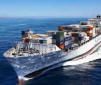

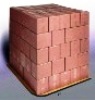
Exporters to USA Canada UAE Europe South Africa Tanzania Kenya Uganda Egypt Nigeria Turkey Mexico Brazil Argentina Chile Dubai etc.
Global or International Suppliers, Exporters, Importers, Manufacturers
I shall pass through this world, but once. If therefore, there is any good that I can do, or if there is any favor that I can show to a fellow human being, let me do it now. Let me not defer or neglect it. For I shall not tread this way again
Methylene Blue is also called ( CAS No. 548-62-9 and 603-47-4 )
Basic blue 9 (C.I. 52015)
3,7-Bis-(dimethylamino)-phenazathonium chloride
3,7-Bis-(dimethylamino)-5-phenothiazinium chloride
C.I. 52015
Methylene blue (C.I. 52015)
Methylthionine chloride
Solvent blue 8 (C.I. 52015)
Swiss blue
Tetramethylthionine chloride
Urolene blue