Calcium Sulfate Commercial Pure Dihydrate Hemihydrate Anhydrous & Calcium Sulphate USP BP Ph Eur IP FCC Food Grade Analytical Reagent, Precipitated Calcium Sulfate Dihydrate Manufacturers |
Supplier, Manufacturer, Exporter of Calcium Sulfate or Calcium Sulphate USP BP Ph Eur IP FCC Food Grade Analytical Reagent, Precipitated Calcium Sulfate Dihydrate, Muby Chemicals of Mubychem Group, established in 1976, is the original manufacturers of Specialty Chemicals, Pharmaceutical Excipient, Fragrance Food & Flavor chemicals, Reagent Grade Chemicals, Shale Gas Fracturing Chemicals in India. Mubychem Group has several manufacturing facilities spread across Western India and world wide contacts and toll manufacturers. We are exporting globally to countries like USA, Canada, Europe, UAE, South Africa, Tanzania, Kenya, Egypt, Nigeria, Cameroon, Uganda, Turkey, Mexico, Brazil, Chile, Peru, Argentina, Dubai, Korea, Vietnam, Thailand, Malaysia, Indonesia, Australia, China, Germany, France, Italy, Portugal, Bangladesh, etc. The products are offered as per required specifications and in correct shape and size in mm or meshs or microns as specified by the buyer. The participating units have one or more accreditations like FDA - cGMP and GLP approval, ISO-9001 Certified, "REACH" Registered, ISO-14001, ISO/IEC 17025, ISO-22000, FSSC 22000, ISO 45001, Kosher Certified, Halal Certified, HACCP, FSSAI. We offer Commercial Pure & IP BP EP Ph Eur USP NF JP FCC Food Grade Analytical Reagent Grades of Chemicals |
| Bookmark this Web Site -- or -- Email This Page Info to a Colleague or Yourself |






Search our website here:
 ---------







Calcium Sulfate Dihydrate CAS Number 10101-41-4; EINECS EC number 231-900-3, HS Code: 283329**, Molecular Weight 172.2, Chemical Formula CaSO4-2H2O
Calcium Sulfate Hemihydrate CAS Number 10034-76-1, EINECS EC number 231-900-3, Molecular Weight 145.15, Chemical Formula CaSO4-0.5H2O
Calcium Sulfate Anhydrous CAS Number 7778-18-9, EINECS EC number 231-900-3, Molecular Weight 136.14, Chemical Formula CaSO4
How big is your requirement or how small
We serve it all.
Specifications, Safety Data Sheet, Manufacturing process details, Wholesale retail prices, Uses etc available on these pages for Calcium Sulfate Dihydrate, Hemihydrate & Anhydrous.
Calcium Sulfate Sulphate Manufacturers
Calcium Sulfate Analytical Reagent Grade
Calcium Sulfate FCC; Calcium Sulphate Food Grade
MSDS Sheet of Calcium Sulfate Sulphate Dihydrtae Manufacturers
MSDS Sheet of Calcium Sulfate Sulphate Hemihydrate Anhydrous Manufacturers
Calcium Sulfate Sulphate USP BP IP Analytical Reagent FCC Food grade Manufacturers
Spanish Sulfato de calcio dihidrato hemihidrato anhidro fabricantes
Portuguese sulfato de cálcio hemi-hidratado dihidrato anidro fabricantes
Calcium Sulfate
Technical & Pure Calcium Sulphate Dihydrate, Gypsum, Precipitated Calcium Sulfate Dihydrate
Also IP BP Ph. Eur. USP Reagent FCC Food Grades Suppliers
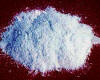
We offer Calcium Sulphate Commercial Pure & IP BP Ph Eur USP Analytical Reagent Food & Nutrient Grades.
Calcium Sulphate as per British Pharmacopoeia 2009
Calcium Sulphate Dihydrate BP Ph Eur
CaSO4,2H2O ... 172.2
Action and use
Excipient.
DEFINITION
Content
98.0 per cent to 102.0 per cent of CaSO4,2H2O i.e. Calcium Sulphate Dihydrate or Calcium Sulfate Dihydrate.
CHARACTERS
Appearance
White or almost white fine powder.
Solubility
Very slightly soluble in water, practically insoluble in ethanol (96 per cent).
IDENTIFICATION
Loss on ignition.
Solution S gives reaction of sulphates.
Solution S gives reaction of calcium.
TESTS
Solution S
Dissolve 1.0 g in 50 ml of a 10 per cent V/V solution of hydrochloric acid R by heating at 50°C for 5 min. Allow to cool.
Acidity or alkalinity
Shake 1.5 g with 15 ml of carbon dioxide-free water for 5 min. Allow to stand for 5 min and filter. To 10 ml of the filtrate add 0.1 ml of phenolphthalein solution and 0.25 ml of 0.01 M sodium hydroxide. The solution is red. Add 0.30 ml of 0.01 M hydrochloric acid. The solution is colourless. Add 0.2 ml of methyl red solution. The solution is reddish-orange.
Chlorides
Maximum 300 ppm.
Shake 0.5 g with 15 ml of water R for 5 min. Allow to stand for 15 min and filter. Dilute 5 ml of the filtrate to 15 ml with water.
Arsenic
Maximum 10 ppm, determined on 5 ml of solution S.
Iron
Maximum 100 ppm.
To 0.25 g add a mixture of 5 ml of hydrochloric acid R and 20 ml of water R. Heat to boiling, cool and filter.
Heavy metals
Maximum 20 ppm.
To 2.5 g add a mixture of 2 ml of hydrochloric acid R and 15 ml of water R. Heat to boiling. Cool and then add 0.5 ml of phenolphthalein solution R. Cautiously add concentrated ammonia until the colour changes to pink. Add 0.5 ml of glacial acetic acid R and dilute to 25 ml with water R. Filter. 12 ml of the filtrate complies with test A. Prepare the reference solution using lead standard solution (2 ppm Pb.
Loss on ignition
18.0 per cent to 22.0 per cent, determined on 1.000 g by ignition to constant mass at 800 ± 50C.
ASSAY
Dissolve 0.150 g in 120 ml of water. Carry out the complex o metric titration of calcium.
1 ml of 0.1 M sodium edetate is equivalent to 17.22 mg of CaSO4,2H2O.
Calcium Sulfate per US Pharmacopoeia USP
Calcium Sulfate USP
Calcium Sulfate USP
CaSO4 136.14
Sulfuric acid, calcium salt (1:1)
Calcium sulfate (1:1) 136.14
Dihydrate 172.17
Calcium Sulfate is anhydrous or contains two molecules of water of hydration. It contains not less than 98.0 percent and not more than 101.0 percent of CaSO4 i.e. Calcium Sulfate or Calcium Sulphate, calculated on the dried basis.
Labeling— Label it to indicate whether it is Calcium Sulfate anhydrous or the Calcium Sulphate dihydrate.
Identification— Dissolve about 200 mg by warming in a mixture of 4 mL of 3 N hydrochloric acid and 16 mL of water. This solution responds to the tests for Calcium and for Sulfate.
Loss on drying— Dry it at a temperature not lower than 250 to constant weight: the anhydrous form loses not more than 1.5% of its weight, and the dihydrate loses between 19.0% and 23.0% of its weight.
Iron— Dissolve 100 mg in 8 mL of 3 N hydrochloric acid, and dilute with water to 47 mL: the limit is 0.01%.
Heavy metals— Mix 2.0 g with 20 mL of water, add 25 mL of 3 N hydrochloric acid, and heat to boiling to dissolve the test specimen. Cool, and add ammonium hydroxide to a pH of 7. Filter, evaporate to a volume of about 25 mL, and re-filter, if necessary, to obtain a clear solution: the limit is 0.001%.
Assay— Dissolve about 300 mg accurately weighed, in 100 mL of water and 4 mL of 3 N hydrochloric acid. Boil, if necessary, to dissolve, and cool before titrating. While stirring, preferably with a magnetic stirrer, add, in the order named, 0.5 mL of triethanolamine, 300 mg of hydroxy naphthol blue, and, from a 50-mL burette, about 30 mL of 0.05 M edetate disodium VS. Add sodium hydroxide solution (45 in 100) until the initial red color changes to clear blue. Continue to add it drop wise until the color changes to violet, and add an additional 0.5 mL. The pH is between 12.3 and 12.5. Continue the titration drop wise with 0.05 M edetate disodium VS to the appearance of a clear-blue endpoint that persists for not less than 60 seconds. Each mL of 0.05 M edentate disodium is equivalent to 6.807 mg of CaSO4.
Calcium Sulfate FCC Food Grade as per US Food Chemical Codex FCC
Calcium Sulfate FCC
CaSO4 Formula wt, anhydrous 136.14
CaSO4·2H2O Formula wt, dihydrate 172.18
INS: 516 CAS: anhydrous 7778-18-9
CAS: dihydrate 10101-41-4
DESCRIPTION
Calcium Sulfate occurs as a fine, white to slightly yellow-white powder. It is anhydrous or contains two molecules of water of hydration.
Function Nutrient; yeast food; dough conditioner; firming agent; sequestrant.
REQUIREMENTS
Identification: Dissolve about 200 mg of sample by warming it with a mixture of 4 mL of 2.7 N hydrochloric acid and 16 mL of water. A white precipitate forms when 5 mL of ammonium oxalate TS is added to 10 mL of the solution. Upon the addition of barium chloride TS to the remaining 10 mL, a white precipitate forms that is insoluble in hydrochloric and nitric acids.
Assay: Not less than 98.0% of CaSO4 i.e. Calcium Sulphate, calculated on the dried basis.
Fluoride: Not more than 0.003%.
Lead: Not more than 2 mg/kg.
Loss on Drying Anhydrous: Not more than 1.5%; Dihydrate: Between 19.0% and 23.0%.
Selenium: Not more than 0.003%.
TESTS
Assay Dissolve 250 mg of sample, accurately weighed, in 100 mL of water and 4 mL of 2.7 N hydrochloric acid, boil to effect solution, and cool. While stirring, preferably with a magnetic stirrer, add about 30 mL of 0.05 M disodium EDTA from a 50-mL burette, then add 25 mL of 1 N sodium hydroxide and 300 mg of hydroxy naphthol blue indicator, and continue the titration to a blue endpoint. Each milliliter of 0.05 M disodium EDTA is equivalent to 6.807 mg of CaSO4.
Calcium Sulfate Dihydrate Analytical Reagent
Also Called Calcium Sulphate Dihydrate
CaSO4 . 2H2O
Formula Wt 172.17
CAS Number 10101-41-4
REQUIREMENTS
Assay: 98.0-102.0% CaSO4 . 2H2O
MAXIMUM ALLOWABLE
Insoluble in dilute hydrochloric acid: 0.02%
Chloride (Cl): 0.005%
Nitrate (NO3): Passes test
Carbonate (CO3): Passes test
Heavy metals (as Pb): 0.002%
Iron (Fe): 0.001%
Magnesium (Mg): 0.02%
Potassium (K): 0.005%
Sodium (Na): 0.02%
Strontium (Sr): 0.05%
Precipitated Calcium Sulfate Dihydrate
Color: Snow White
Odor: Neutral
pH: 7 approximate
Iron as Fe: <20ppm
Chloride as Cl: <150ppm
Loss on drying (LOD): 20.15%
Assay: >99.9%
Heavy Metals as Pb: <2ppm
Specific Gravity: 0.6 gms/cc
SIEVE ANALYSIS
Through 50 mesh: 100 %
Through 100 mesh: 100%
Through 200 mesh: 100 %
Through 300 mesh: 98 %.
We manufacture and supply as under:
Calcium Behenate or Calcium docosanoate
Manufacturers:
MUBY CHEMICALS
Ambernath Mumbai, Ankleshwar Gujarat, India
TEL: (OFFICE) +912223770100, +912223726950
Current Date Time in India GMT+5:30
e-mail: info@mubychem.com
USA, Canada, Mexico and other American
neighbouring buyers may
e-mail: us@mubychem.com
Call toll-free 1-877-682-9243 (1-877-MUBYCHEM)

Copyright and Usual Disclaimer is Applicable.
Last :
22 October, 2024


Exporters to USA Canada UAE Europe South Africa Tanzania Kenya Uganda Egypt Nigeria Turkey Mexico Brazil Argentina Chile Dubai etc.
I shall pass through this world, but once. If therefore, there is any good that I can do, or if there is any favor that I can show to a fellow human being, let me do it now. Let me not defer or neglect it. For I shall not tread this way again